Se afișează postările cu eticheta pasiuni de luat în seamă. Afișați toate postările

marți, 9 iunie 2015

Art on the Move in Eastern Europe and the Mediterranean in the Early Modern Period


INVITATION TO THE CONFERENCE
From Riverbed to Seashore:

Art on the Move in Eastern Europe and the Mediterranean in the Early Modern Period

 June 12-13, 2015

New Europe College, Bucharest


[The Getty Foundation, Connecting Art Histories Initiative; Harvard University]


JUNE 12, 2015


Introductory Remarks


9:30-9:50 – Alina Payne (Harvard University, USA) 


Panel I. The Black Sea


9:50-10:20 – Cemal Kafadar (Harvard University, USA) “Vampire trouble is more serious than the mighty plague.” A Comparative Look at the History of Evil and Mischief, inspired by Evliya Celebi (1611-1684?)


10:20-10:50 – Nicole Kançal-Ferrari (Istanbul Şehir University, Turkey) Investigation in a

Shared Aesthetic Language: Architecture and Artistic Environment of the Golden Horde and

Early Crimean Khanate Period in Crimea (XIIIth – XVIth centuries)  


10:50-11:20 – Iván Szántó (Eötvös Loránd University, Institute of Art History, Hungary) Re-

Imagining Ottoman Space in the Age of Reason


11:20-11:50 – Coffee Break


11:50-12:20 – Diana Belci (University “Politehnica” Timisoara, Romania) Wood and Stone: Cultural Transfers in Early Modern Banat Architecture


12:20-12:50 – Tatiana Sizonenko (University of San Diego, California) Venetian Architecture for the Tsar: Alevisio Novy's Encounter with the Arts of Muscovy 


12:50-13:20 – Daniela Calciu (Ion Mincu University of Architecture and Urbanism, Romania)

Sociability Seeps: Coffee on the Lower Danube (Moldavia and Walachia) in the 17th and Early 18thcenturies


13:20-14:20 – Lunch Break


Panel II. Danubian Exchanges


14:20-14:50 – Vladimir Simić (University of Belgrade, Serbia) Printed Cyrillic Books Between Venice and the Danube in the First Half of the 16th Century 


14:50-15:20 – Jacek Bielak (University of Gdansk, Art History Institute, Poland) Amber Artworks and their Meaning in the Transcultural Exchange


15:20-15:50  – Alexander Osipian (Kramatorsk Institute of Economics and Humanities, Ukraine)

Oriental Carpets and Rugs as Complex Social Messages: Attitudes of Armenian Merchants, Polish Nobility and Catholic Intellectuals in the Seventeenth-Century Polish Kingdom


15:50-16:20 – Coffee Break


16:20-16:50 – Anna-Mária Nyárádi (Eötvös Loránd University, Institute of Art History, Hungary) Goldsmithery Made for the Cantacuzinos: How Şeytanoğlu’s Descendants Made Art Flourish in Wallachia


16:50-17:20 – Michał Wardzyński (University of Warsaw, Institute of Art History, Poland) On the Way to the ‘New Empire’: An ‘After-life’ of the Roman and Byzantine Marble and Porphyry's Traditions in Central Europe during the Early-Modern Era


17:20-17:50 – Stanko Kokole (University of Ljubljana, Slovenia) “ut ad Imperatoriam sedem transmitterentur ...”: Ancient Roman Inscriptions on the Move within the Habsburg Empire of Charles VI


JUNE 13, 2015


The Adriatic 


9:30-10:00 – Ioli Kalavrezou (Harvard University, USA) The Reliquary of St. Niphon: Relations

Between Wallachia, Constantinople and Mt. Athos


10:00-10:30 – Darka Bilić (Institute of Art History, Center Cvito Fisković, Croatia) The Lazareto in Split Between East and West


10:30-11:00 – Elizabeth Kassler-Taub (Harvard University, USA) Early Modern Sicily and the Eastern Frontier


11:00-11:30 – Mirko Sardelić (Croatian Academy of Sciences and Arts, Zagreb, Croatia) Between Venice and the Levant: a 16th-Century Ship in the Adriatic


11:30-12:00 – Coffee Break


12:00-12:30 – Josip Belamarić (Institute of Art History, Center Cvito Fisković, Croatia) The Villa in Renaissance Dubrovnik: ars ubi naturam perfecit apta rudem  (where art has tamed the wild nature)


12:30-13:00 – Ana Šverko (Institute of Art History, Center Cvito Fisković, Croatia) Michele and

Giangirolamo Sanmicheli’s Fort St Nicholas in Šibenik in the Context of Adriatic Renaissance Fortifications


13:00-13:30 – Daniel Premerl (Institute of Art History, Zagreb, Croatia) Visual Propaganda for the Illyrian Cause in Urban VIII's Rome 


vineri, 18 iulie 2014

Susan Hiller: An anthropologist who decided to become an artists

Susan Hiller
Susan Hiller, Work in Progress, Friday , 1980
Susan Hiller
Work in Progress, Friday 1980
© Susan Hiller.

Would like to know more about Hiller's 'process of collecting and restaging cultural artefacts and experiences' and 'how visual imagery can inform the understanding of intellectual ideas' (see
http://webarchive.nationalarchives.gov.uk/20120305084711/http://www.tate.org.uk/britain/exhibitions/susanhiller/default.shtm).

marți, 10 decembrie 2013

Photography, teenagers and art therapy

Anna Konik. An artist of whose artworks I saw on line. Looking at her photos I felt inspired and motivated somehow: they are simple, real, from the realm of our every day life.

Looking at Anna Konic's website I thought of making a seminar in a small city in south of Italy for teenagers. About images and artworks, about using a camera and understanding the world around as well as building themselves; how art can help them, how camera is a tool of inermedaing with their fears and motivate their ambitions.

Few lines about my first impression of Anna's website:
Grey squares, not so nice really, quite cheap web design, but inside....inside there are some shiny things (shiny for me, I suppose). I look at the photos and the extra videos, the appendixes - I always like to see what is not meant to be seen first: Hair, remains, old buildings - empty spaces, faces, boredom, poverty on faces, drunk. I look also on her CV and in a movie of herself: slim, modest, eastern european happyness of joining 'the world.' To me she looks determined, well organised. She likes to fill in her CV evvvvery single scholarship she took, evvrry single project she thought of, evvery seminar she held, and every other things. I am not going to make a list of her 'every.' (inner thought:  instead, I should make a list of my every!) But just to remark that in this obsessive reference to herself, one can read a certain joy of bringing up to the end some ideas and projects that people in general have. she not only had them, she also filled them, ticked them scrupulously.
How many passions artists have except art?
what?!
She seems to have. she made theatre, she participated and joined some/ various groups of therapy, she likes mountain climbing and extreme experiences, recollection, narrativity, she is interested in people and people's problems like 'being a migrant' , or 'a poor woman in a rich suburb of a wealthy town.' she seems to have always the camera turned on.

To me, she seems that she could have been many other things other than being an artist.
I like glimspes of her work. I fear the phenomenologists' part, the one where she reffers to big names and their proximity in that special place in Berlin. I cannot stop thinking how was that place in 1938 two years before the climax? let's go back to likings. I like the anthropological and human touch of her projects, and the imperfection of their presentation in the following site:
http://www.annakonik.art.pl/


luni, 12 septembrie 2011

CFP: Museum Utopias: Navigating the Imaginary, Ideal and Possible Museum

A Two Day Interdisciplinary Postgraduate Symposium at the School of

Museum Studies, University of Leicester Tuesday 27th and Wednesday

28th March 2012

http://en.wikipedia.org/wiki/Leicester

In everyday life, the chance to dream, to imagine, to explore the idea

of the museum is limited, leaving many museums reacting to change,

rather than being able to think about how the museum could be. This

Symposium will give museum researchers, students and practitioners the

opportunity to consider the changes that are taking place in the world

and how museums might respond to them, using the idea of Utopia as a

place for dreaming as well as thinking practically about how these

challenges might be addressed.


Despite the impossibility of building Utopia, we arguably retain our

need for what Barbara Kirshenblatt- Gimblett (2004) has called ‘the

utopian imagination’. Utopia can inspire us to challenge the status

quo, and to transform our world for the better. From temples of the

Muses dedicated to the arts to today’s democratic forums of debate and

consumption, the concept and the realization of the museum have

changed dramatically during its long and varied history. Stepping into

the Utopian otherworld enables us to engage the past and present

incarnations of the museum, both real and imagined, and begin to

navigate its future.


Papers are invited to address the following key themes, but we welcome

and encourage any creative or imaginative ideas that correspond with

the aims of the Symposium.


Please see the complete Call for Papers here: http://www.tinyurl.com/mutopia


Patrick Cox

Editor, H-MATERIAL CULTURE

http://camden-rutgers.academia.edu/PatrickCox

PhD Student

http://facultyexperts.blogs.rutgers.edu/

Department of Childhood Studies, Rutgers University

http://childhood.camden.rutgers.edu/

https://email.rutgers.edu/mailman/listinfo/exploring_childhood_studies

luni, 28 februarie 2011

Gold and My cocaine museum


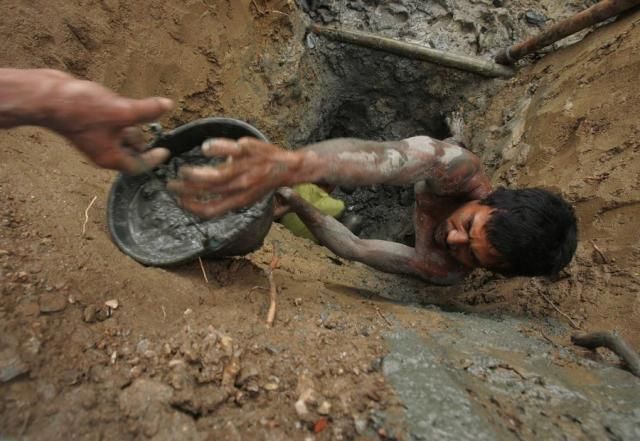
My Cocaine Museum e o carte care vorbeste despre un gand. despre un : Ce ar fi daca... Daca am putea intelege ca in spatele obiectelor de aur care exista in marile muzee ale lumii este mult pamant si oboseala si apa si truda si iar apa si saracie si alcool si ... frunze de coca. Da, frunze de coca mestecate in coltul gurii, ca sa ma treaca oboseala si tot restul. Cartea asta este un altfel de carte de antropologie. O  etnografie pe care o citesti cu sufletul la gura pentru ca e in primul rand despre oameni, cu nume, cu povesti personale, istorii de viata. In Nordul Columbiei sunt oameni care muncesc cu zilele pentru un gram de aur. Aur pe care il vand imediat la magazinul din colt, pe un cantar in care de cealalta parte a balantei sta un bob - un bob de porumb. Primesc putini bani, sau mai degraba putina mancare.

Cat aur ai gasit azi?
Un gram.
Raspunsul e invariabil.
Chiar daca uneori au gasit mai mult sau mai putin. Superstitii. E multa invidie si ura si vraji de mana…

Soare, caldura, stat degeaba (decat munca ca sa muncesti, mai bine stai), sunet de muzica in surdina undeva la umbra si racoare, gust de fruze de coca mestecate intr-un colt de gura… Asta e! Ploaie...
despre water in water,
Julio arboleda’s stone,
Diging,
Mines,
“Paramilitary lover”,
Bocanegra si povestea teribila cu omul care a stat nu mai stiu cati ani in inchisoarea iaia renumita pentru ca a violat o femeie, apoi pentru ca ea l-a turnat politiei, omul s-a intors si …
im - ha!
Cica muzeul asta (My cocaine museum) ar avea un prototip - pe faimosul si extraordinarul Gold Museum care chiar exista in centrul Bogotei, cum urci la etajul 2 In Banca Republicii.
Ca sa scrie My Cocaine Museum Michael Taussig a petrecut cativa ani in Columbia si pe valea raului Timbiqui. Cartea a aparut in 2006. El si-a inceput cercetarea in 1969 si spune ca de atunci a mers acolo in fiecare an.

p. X: “To walk through the Gold Museum is to become vaguely conscious of how for millennia the mistery of Gold has through myth and stories sustained the basis of money worldwide. But one story is missing. The museum is silent as to the fact that for more than three centuries of Spanish occupation that the colony stood for and depended upon was the labour of slaves from Africa in the gold mines. Indeed, this gold, along with the silver from Mexico and Peru, was what primed the pump of the capitalist takeoff in Europe, its primitive accumulation. (…) It seems so monstruously unjust, this denial, so limited and mean a vision incapable of imagining what it was like diving for gold in the wild coastal rivers, moving boulders with your bare hands, standing barefoot in mud and rain day after day, so unable to even tip your hat to the brutal labor people still perform today alongside the spirits of their parents and grandparents and of all the generations that before them had dug out the countr’s wealth. (…) The Gold Museum is also silent about the fact that if it was gold that determined the political economy of the colony, it is cocaine – or rather US prohibition of it – that shapes the country today. Not to talk about cocaine, not to display it, is to continue with the same denial of reality that the museum practices in relation to slavery. Like gold, cocaine is imbued with violence and greed, glitter that reeks transgression. What’s more, cocaine has roots in prehistory too.

(((…)))

p. XiX: But I am not that interested in museums. I find them dead and even hostile places, created for a bored bourgeoisie bereft of life and experience. What I am interested in is the life of gold and the life of cocaine where one is dying and the other is taking off (…) What interests me and I hope you too (…) is to combine a history of things with a history of people forced by slavery to find their way through these things. What things? Heat and rain, forests and rivers, stones and swamps, colour and islands – those sort of things – and especially the miasma emanating from the swamp.(…)

si dupa ce a terminat de scris cartea Taussig spune
p. 315. scriind cartea asta am sperat ca voi trezi la viata toti cei 38 de mii 500 de zei si o data cu ei, se vor sparge vitrinele.
“This is my magic and this is why we write and why we write strange apotropaic texts like My Cocaine Museum made of spells, hundreds and thousands of spells, intended to break the catastrophic spell of things, starting with the smashing of vitrines whose sole purpose is to upload the view that you are you and over there is there and here you are – looking at captured objects, from the outside. But now, no more! (…) Ghosts and gods peel back the money, back into mud, then stone – hundreds and thousands and millions of white and orange stones like eggs flowing yolk by the riverbanks all over Columbia where kids tumbling home from school in the midday heat make the stones make their jigger-jigger music, grumbling yet happy like the mad wail of the bells crying out for the dead all day long and longer still ringing in your years.”

joi, 6 mai 2010

uezum

Acum că am schimbat titlul blogului îmi vine să scriu mult mai ușor, textele curg mai lesne.  Înainte se numea Muzeu în România sau Muzeu Altfel. Responsabilitate prea mare și nu s-a înhămat niciun muzeograf plictisit să ne deplictisim împreună. Muzeul de Luni e mai soft. Luni, când toate muzeele sunt închise, pot respira și pot face lucrurile în voie. Inclusiv dans contemporan.

Îmi e greu să îmi iau anumite pasiuni serioase în serios. Așa e cu arta contemporană sau dansul contemporan. Dar... de câte ori am mers pe drumurile astea două - în special cu dansul, am nimerit foarte bine. Ultima dată am gasit casă la Londra și un prieten rar și bun.

Uezum - adică muzeu pe dos -