The British Association for the Study of Religions (BASR) is receptive to including the
participation of scholars in other disciplines and fields of study.
This year, the conference (Leeds, UK/ 2-4 September 2019) will be held in collaboration with documentary film makers from Leeds Trinity University’s Media, Film and Culture team and IRIS (International Research Centre for Interactive storytelling) and will include the screening of several documentary projects. As such, we welcome papers and panels on the theme of screen media, film and religion as well as on the academic study of religion/s more generally. It does not need to fit the theme.
This can include religion in all types of media, including, but not limited to:
• Film
• Documentary
• Gaming – virtual worlds
• Digital technology
• Production of screen media projects on religion
In addition, we welcome any research approach applicable to the study of religion/s,
including but not limited to:
• Visual ethnography
• Filmmaking
• Collaborative practice
• Photo-elicitation
• Other innovative research methods
More info at: https://basr.ac.uk/annual-conference-2019/
Keynote: Dr James Kapalo, University College, Cork, who is the Principal Investigator of
the European Research Council Project Creative Agency and Religious Minorities: Hidden
Galleries in the Secret Police Archives in Central and Eastern Europe (Hidden Galleries).
www.hiddengalleries.eu
Se afișează postările cu eticheta conferinte cu si despre muzee. Afișați toate postările
Se afișează postările cu eticheta conferinte cu si despre muzee. Afișați toate postările
joi, 4 iulie 2019

sâmbătă, 30 iunie 2018
Below the Surface
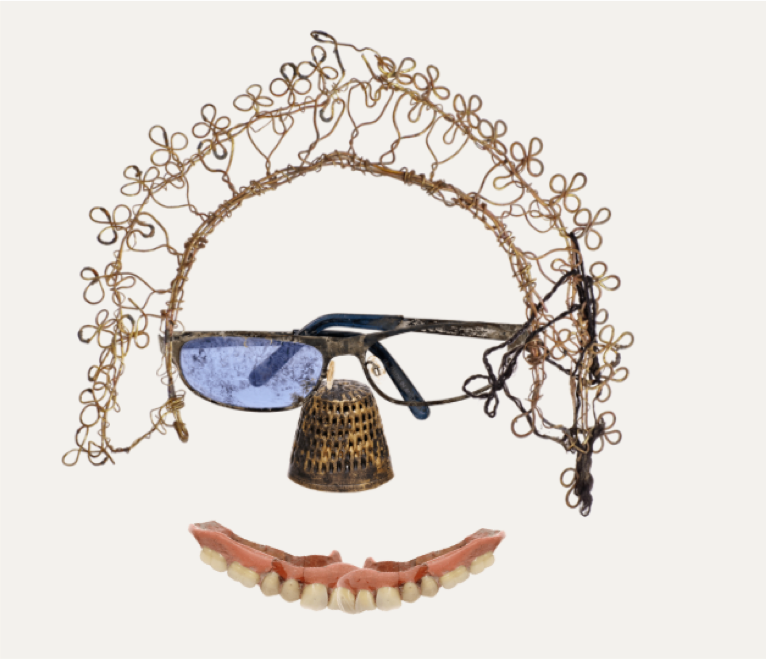
https://belowthesurface.amsterdam/en/vitrines
Are you bored with museums? This museum in Amsterdam seems like a good remedy for that.
I did not see it, but I would love to. This one and The Museum of Jurassic Technology!
Let's start a list of the weird independent sector.
joi, 17 mai 2018
Cambridge conference on the future of ethnographic museums
The SWICH conference derives from a project co-funded by the European Council: Exhibiting Culture, Exhibiting Empire, Exhibiting Europe.
Looking at the list of speakers, one could see some of the 10 institutional partners: museums in Oxford (Pitt Rivers), Berlin, Leiden, Hamburg, Wellington (Te Papa Museum), Stockholm, Dublin, Rome, Marseille, Lubliana. Really curious about the outputs of this event.

This image from a shop in London (2008) represents my contribution to the topic. The future of ethnographic museums is to be found outside the ethnographic museums!
SWICH Summative Conference
EXHIBITING CULTURE, EXHIBITING EMPIRE, EXHIBITING EUROPE
King’s College, University of Cambridge
Wednesday 11 – Friday 13 July 2018
Programme
DAY 1: WEDNESDAY 11 JULY
15:30 – 16:30 KEYNOTE 1:
Sharon MacDonald,
Alexander von Humboldt Professor, Institut für Europäische
Ethnologie,
Humboldt-Universität zu Berlin
Respondent: Claudia Augustat
16:30 – 18:00 PANEL 1: _NEW DIRECTIONS_
Chair: Guido Gryseels, RMCA, Tervuren
Panelist 1: Christian Schicklgruber, Weltmuseum, Vienna
Panelist 2: Barbara Plankensteiner, Museum für Völkerkunde, Hamburg
Panelist 3: Laura van Broekhoeven, Director, Pitt Rivers Museum
18:00 – 19:30 EVENING RECEPTION AT MAA
Welcome from Nicholas Thomas
DAY 2: THURSDAY 12 JULY
09:30 – 10:30 KEYNOTE 2:
Arapata Hakiwai
Kaihautū (Māori Co-leader), Museum of New Zealand Te Papa Tongarewa
Respondent:
10:30 – 11:00 Coffee
11:00 – 12:30 PANEL 2: _PUBLICS AND THEIR ENGAGEMENTS_
Chair: Malavika Anderson (Wellcome Trust, London)
Panelist 1: Rosa Anna Di Lella (Museo delle Civiltà, Rome)
Panelist 2: Michael Barrett (Värdskulturmuseerna, Stockholm)
12:30 – 13:30 Lunch
13:30 – 14:00 INTERVENTION 1: Jacqueline Hoàng Nguyen
14:00 – 15:30 PANEL 3: _WHAT IT MEANS TO CARE FOR COLLECTIONS_
Chair: Mark Elliott (MAA, Cambridge)
Panelist 1: Dean Sully (UCL, London)
Panelist 2: Michel Lee (Värdskulturmuseerna, Stockholm)
Panelist 3: Judith Finlay (National Museum of Ireland, Dublin)
15:30 – 16:00 Coffee
16:00 – 16:30 INTERVENTION 2: George Nuku
16:30 – 17:00 Discussion
19:00 – 21:00 Conference Dinner
DAY 3: FRIDAY 13 JULY
09:30 – 10:30 PANEL 4: GIVING IT BACK?
Chair:
Panelist 1: Wayne Modest (Research Center for Material Culture, Leiden)
Panelist 2: Nicholas Thomas (MAA, Cambridge)
Panelist 3: Ulrich Menter (Linden Museum, Stuttgart)
10:30 – 11:00 Coffee
11:00 – 12:30 PANEL 5: _SWICH FUTURES_
Chair:
Panelist 1: Salvador Garcia Arnillas (Museu de Cultures del Mon,
Barcelona)
Panelist 2: Bojana Rogel Skafar (Slovenia Etno-Museum, Ljubljana)
Panelist 3: Sandra Ferracuti (Lindenmuseum, Stuttgart)
Panelist 4: Veerle Taekels (Royal Museum for Central Africa, Tervuren)
Panelist 5: Mikael Mohammed (Musée des civilisations de l’Europe et
de la
Méditerranée, Marseille)
12:30-13:00 CLOSING REMARKS: WHERE NEXT?
Michael Cooke (Arts Council England)
Henrietta Lidchi (Nationaal Museum van Wereldculturen, Leiden)
Benoît de L’Estoile (CNRS, France)
13:00-14:00 Lunch
marți, 9 iunie 2015
Art on the Move in Eastern Europe and the Mediterranean in the Early Modern Period
INVITATION TO THE CONFERENCE
From Riverbed to Seashore:
Art on the Move in Eastern Europe and the Mediterranean in
the Early Modern Period
June 12-13, 2015
New Europe College, Bucharest
[The
Getty Foundation, Connecting Art Histories Initiative; Harvard University]
JUNE 12, 2015
Introductory Remarks
9:30-9:50 – Alina Payne (Harvard
University, USA)
Panel I. The Black Sea
9:50-10:20 – Cemal Kafadar (Harvard
University, USA) “Vampire trouble is more
serious than the mighty plague.” A Comparative Look at the History of Evil and
Mischief, inspired by Evliya Celebi (1611-1684?)
10:20-10:50 – Nicole Kançal-Ferrari
(Istanbul Şehir University, Turkey) Investigation
in a
Shared
Aesthetic Language: Architecture and Artistic Environment of the Golden Horde
and
Early
Crimean Khanate Period in Crimea (XIIIth – XVIth
centuries)
10:50-11:20 – Iván Szántó (Eötvös
Loránd University, Institute of Art History, Hungary) Re-
Imagining
Ottoman Space in the Age of Reason
11:20-11:50 – Coffee Break
11:50-12:20 – Diana Belci
(University “Politehnica” Timisoara, Romania) Wood and Stone: Cultural Transfers in Early Modern Banat Architecture
12:20-12:50 – Tatiana Sizonenko
(University of San Diego, California) Venetian
Architecture for the Tsar: Alevisio Novy's Encounter with the Arts of
Muscovy
12:50-13:20 – Daniela Calciu (Ion
Mincu University of Architecture and Urbanism, Romania)
Sociability
Seeps: Coffee on the Lower Danube (Moldavia and Walachia) in the 17th
and Early 18thcenturies
13:20-14:20 – Lunch Break
Panel II. Danubian Exchanges
14:20-14:50 – Vladimir Simić
(University of Belgrade, Serbia) Printed
Cyrillic Books Between Venice and the Danube in the First Half of the 16th
Century
14:50-15:20 – Jacek Bielak
(University of Gdansk, Art History Institute, Poland) Amber Artworks and their Meaning in the Transcultural Exchange
15:20-15:50 – Alexander Osipian (Kramatorsk Institute of
Economics and Humanities, Ukraine)
Oriental
Carpets and Rugs as Complex Social Messages: Attitudes of Armenian Merchants,
Polish Nobility and Catholic Intellectuals in the Seventeenth-Century Polish
Kingdom
15:50-16:20 – Coffee Break
16:20-16:50 – Anna-Mária Nyárádi
(Eötvös Loránd University, Institute of Art History, Hungary) Goldsmithery Made for the Cantacuzinos: How
Şeytanoğlu’s Descendants Made Art Flourish in Wallachia
16:50-17:20 – Michał Wardzyński
(University of Warsaw, Institute of Art History, Poland) On the Way to the ‘New Empire’: An ‘After-life’ of the Roman and
Byzantine Marble and Porphyry's Traditions in Central Europe during the
Early-Modern Era
17:20-17:50 – Stanko Kokole
(University of Ljubljana, Slovenia) “ut
ad Imperatoriam sedem transmitterentur ...”: Ancient Roman Inscriptions on the
Move within the Habsburg Empire of Charles VI
JUNE 13, 2015
The Adriatic
9:30-10:00 – Ioli Kalavrezou
(Harvard University, USA) The Reliquary
of St. Niphon: Relations
Between
Wallachia, Constantinople and Mt. Athos
10:00-10:30 – Darka Bilić (Institute
of Art History, Center Cvito Fisković, Croatia) The Lazareto in Split Between East and West
10:30-11:00 – Elizabeth Kassler-Taub
(Harvard University, USA) Early Modern
Sicily and the Eastern Frontier
11:00-11:30 – Mirko Sardelić
(Croatian Academy of Sciences and Arts, Zagreb, Croatia) Between Venice and the Levant: a 16th-Century Ship in the Adriatic
11:30-12:00 – Coffee Break
12:00-12:30 – Josip Belamarić
(Institute of Art History, Center Cvito Fisković, Croatia) The Villa in Renaissance Dubrovnik: ars ubi naturam perfecit apta
rudem (where art has tamed the wild
nature)
12:30-13:00 – Ana Šverko (Institute
of Art History, Center Cvito Fisković, Croatia) Michele and
Giangirolamo
Sanmicheli’s Fort St Nicholas in Šibenik in the Context of Adriatic Renaissance
Fortifications
13:00-13:30 – Daniel Premerl
(Institute of Art History, Zagreb, Croatia) Visual
Propaganda for the Illyrian Cause in Urban VIII's Rome
marți, 2 iunie 2015
Textile Fragments
I think it is always fascinating to think that museums have fragments of things, and not entire things. Like for example, in the Museum of the Romanian Peasant there is an entire store full of textile fragments, called MOSTRE. The display in the museum and artists such as Lena Constante took the idea of fragments and patchwork and made extremely powerful pieces of art.
This idea made me think of a conference on textile fragments, their use and display (in museums) held at the University of Wolverhampton in 2014.
http://www.wlv.ac.uk/research/research-institutes-and-centres/centre-for-historical-research/centre-for-the-history-of-retailing-and-distribut/conferences-workshops--past-events/workshop--textile-fragments-incomplete-textiles/
But also, of the idea that sometimes clothes themselves contain fragments, and that the most useful form of textile fragment is the patch, especially the patches on the clothes of the poor. The following image comes from the Book cover of Vivienne's Richmond's book: Clothing the Poor, Cambridge University Press, 2013.

Are textile fragments so different from archives of image and text?
Does the closeness of the body impact in any way the way textiles are valued and displayed?
Can poverty be put on display? Maybe, an interesting way to put it would be through the work of patches...and textile fragments, the quintessence of need, care (love) and work.
miercuri, 13 iunie 2012
Education in the Expanded Field: Critical Pedagogy as Poetics in Contemporary Art
Conference held by Sven SPIEKER
Professor and Chair, Department of Germanic, Slavic and Semitic Studies, University of California, Santa Barbara
on Wednesday, June 20, 2012, at 5 p.m.
at the New Europe CollegeStr. Plantelor 21, Tel: 021 307 99 10, Bucharest
*** I want to devote this lecture to what I am calling “the expanded field of education in contemporary art” in the first two decades of the 21st century. I am guided by the fervor with which the art world has embraced, over the last decade or so, topics such as learning, education, pedagogy, teaching, research, and study as a critical practice, proposing either to work within institutions of education, or making education the focus of their work. These tendencies do not necessarily promote knowledge as a universal end in itself, on the contrary. […] United in their opposition to the political status quo; the failures of public education; and the consequences of neo-liberal capitalist economic policies all over the world, the artists I want to discuss here promote teaching and study as an open-ended and even “poetic” practice that would not be grounded in the manipulative pedagogy of Platonic dialogue with its predictable “learning outcome” (the battle cry of the Bologna process): education, they argue, means unpredictable adventures in the realm of knowledge.
*** Sven SPIEKER teaches in the Comparative Literature Program; the Department of Art and Art History; and the Department of Germanic, Slavic, and Semitic Studies at the University of California, Santa Barbara. He specializes in European modernism, with an emphasis on the Eastern European avant-gardes, contemporary art – with an emphasis on Eastern Europe -, and critical theory. Spieker has published on topics ranging from the Russian avant-garde (Malevich, Rodchenko, Dziga Vertov) to late 20th-century art in Russia and Western Europe (Ilya Kabakov, Boris Mikhailov, Marcel Duchamp, Martin Kippenberger). His essays and articles have appeared in German, Russian, Swedish, Polish and English. Spieker has organized several international conferences (most recently, The Office in the Studio: The Administration of Modernism at the University of Jena, Germany; and in 2011 a roundtable on critical curatorship in Eastern Europe at the College Art Association Meeting, New York City. Participants: EmiliaKabakov; Cosmin Costinas; Piotr Piotrowski; Victor Misiano; Karel Cisar; Lolita Joablonskiene). Spieker's latest book publication focused on the archive as a crucible of European modernism (The Big Archive, MIT Press, 2008). Spieker is the editor of ARTMargins (www.artmargins.com).Current projects include a Critical Anthology of Conceptual Art in Eastern Europe, and a study of Kazimir Malevich in the media age. ***
Professor and Chair, Department of Germanic, Slavic and Semitic Studies, University of California, Santa Barbara
on Wednesday, June 20, 2012, at 5 p.m.
at the New Europe CollegeStr. Plantelor 21, Tel: 021 307 99 10, Bucharest
*** I want to devote this lecture to what I am calling “the expanded field of education in contemporary art” in the first two decades of the 21st century. I am guided by the fervor with which the art world has embraced, over the last decade or so, topics such as learning, education, pedagogy, teaching, research, and study as a critical practice, proposing either to work within institutions of education, or making education the focus of their work. These tendencies do not necessarily promote knowledge as a universal end in itself, on the contrary. […] United in their opposition to the political status quo; the failures of public education; and the consequences of neo-liberal capitalist economic policies all over the world, the artists I want to discuss here promote teaching and study as an open-ended and even “poetic” practice that would not be grounded in the manipulative pedagogy of Platonic dialogue with its predictable “learning outcome” (the battle cry of the Bologna process): education, they argue, means unpredictable adventures in the realm of knowledge.
*** Sven SPIEKER teaches in the Comparative Literature Program; the Department of Art and Art History; and the Department of Germanic, Slavic, and Semitic Studies at the University of California, Santa Barbara. He specializes in European modernism, with an emphasis on the Eastern European avant-gardes, contemporary art – with an emphasis on Eastern Europe -, and critical theory. Spieker has published on topics ranging from the Russian avant-garde (Malevich, Rodchenko, Dziga Vertov) to late 20th-century art in Russia and Western Europe (Ilya Kabakov, Boris Mikhailov, Marcel Duchamp, Martin Kippenberger). His essays and articles have appeared in German, Russian, Swedish, Polish and English. Spieker has organized several international conferences (most recently, The Office in the Studio: The Administration of Modernism at the University of Jena, Germany; and in 2011 a roundtable on critical curatorship in Eastern Europe at the College Art Association Meeting, New York City. Participants: EmiliaKabakov; Cosmin Costinas; Piotr Piotrowski; Victor Misiano; Karel Cisar; Lolita Joablonskiene). Spieker's latest book publication focused on the archive as a crucible of European modernism (The Big Archive, MIT Press, 2008). Spieker is the editor of ARTMargins (www.artmargins.com
duminică, 10 iunie 2012
anthropology in/of museums
8-10th of June, RAI Conference at British Museum.
Two panels dedicated to museums, representation and the relation between anthropology and the museum world.
P02 Exhibiting Anthropology and
P14 Anthropology in/of museums.

I particularly think that discussions which have anthropological background applied to the museum world are very useful. Some of the reasons for this assumption are the following:
a. anthropology is reflexive and critical at its own discourse and making (also as a response to its collonial non-reflexive past) - and museums very often tend not to be reflexive. Why so, it is an interesting topic of discussion.
b. anthropology works with scale - personal stories, options, realities; museums tend to generalise.
c.both anthropology and museums deal with truth.
d.in relation to that, both deal with representation/s of partial truths.
e. it was also discussed the role of art interventions in ethnological or anthropological museums - and its playful, critical point in addressing issues that employeed researchers and currators in museums are not allowed to
f. etc - this was by far the most interesting part!
being said that, I attach two images from a bok with the installation of Fred Wilson, an artist who specifically works and criticises the museum field.

Two panels dedicated to museums, representation and the relation between anthropology and the museum world.
P02 Exhibiting Anthropology and
P14 Anthropology in/of museums.

I particularly think that discussions which have anthropological background applied to the museum world are very useful. Some of the reasons for this assumption are the following:
a. anthropology is reflexive and critical at its own discourse and making (also as a response to its collonial non-reflexive past) - and museums very often tend not to be reflexive. Why so, it is an interesting topic of discussion.
b. anthropology works with scale - personal stories, options, realities; museums tend to generalise.
c.both anthropology and museums deal with truth.
d.in relation to that, both deal with representation/s of partial truths.
e. it was also discussed the role of art interventions in ethnological or anthropological museums - and its playful, critical point in addressing issues that employeed researchers and currators in museums are not allowed to
f. etc - this was by far the most interesting part!
being said that, I attach two images from a bok with the installation of Fred Wilson, an artist who specifically works and criticises the museum field.

luni, 17 octombrie 2011
building peace in the minds of men and women?
se refera la SE Europei
e un workshop - deci se lucreaza.
aduna directori de muzee din mai multe state din SE Europei.
Daca subiectul e SE Europei, intalnirea organizata de UNESCO are loc la Venetia sau Torino, firesc, nu?
http://www.unesco.org/new/en/unesco/events/culture-events/?tx_browser_pi1%5BshowUid%5D=4672&cHash=cfaa382ee6
Si cica vor face o expozitie umblatoare in care vor vorbi despre pace si razboi. Cine vor vorbi? Directorii de muzee!
e un workshop - deci se lucreaza.
aduna directori de muzee din mai multe state din SE Europei.
Daca subiectul e SE Europei, intalnirea organizata de UNESCO are loc la Venetia sau Torino, firesc, nu?
http://www.unesco.org/new/en/unesco/events/culture-events/?tx_browser_pi1%5BshowUid%5D=4672&cHash=cfaa382ee6
Si cica vor face o expozitie umblatoare in care vor vorbi despre pace si razboi. Cine vor vorbi? Directorii de muzee!
luni, 12 septembrie 2011
CFP: Museum Utopias: Navigating the Imaginary, Ideal and Possible Museum
A Two Day Interdisciplinary Postgraduate Symposium at the School of
Museum Studies, University of Leicester Tuesday 27th and Wednesday
28th March 2012
http://en.wikipedia.org/wiki/Leicester
In everyday life, the chance to dream, to imagine, to explore the idea
of the museum is limited, leaving many museums reacting to change,
rather than being able to think about how the museum could be. This
Symposium will give museum researchers, students and practitioners the
opportunity to consider the changes that are taking place in the world
and how museums might respond to them, using the idea of Utopia as a
place for dreaming as well as thinking practically about how these
challenges might be addressed.
Despite the impossibility of building Utopia, we arguably retain our
need for what Barbara Kirshenblatt- Gimblett (2004) has called ‘the
utopian imagination’. Utopia can inspire us to challenge the status
quo, and to transform our world for the better. From temples of the
Muses dedicated to the arts to today’s democratic forums of debate and
consumption, the concept and the realization of the museum have
changed dramatically during its long and varied history. Stepping into
the Utopian otherworld enables us to engage the past and present
incarnations of the museum, both real and imagined, and begin to
navigate its future.
Papers are invited to address the following key themes, but we welcome
and encourage any creative or imaginative ideas that correspond with
the aims of the Symposium.
Please see the complete Call for Papers here: http://www.tinyurl.com/mutopia
Patrick Cox
Editor, H-MATERIAL CULTURE
http://camden-rutgers.academia.edu/PatrickCox
PhD Student
http://facultyexperts.blogs.rutgers.edu/
Department of Childhood Studies, Rutgers University
http://childhood.camden.rutgers.edu/
https://email.rutgers.edu/mailman/listinfo/exploring_childhood_studies
Museum Studies, University of Leicester Tuesday 27th and Wednesday
28th March 2012
http://en.wikipedia.org/wiki/Leicester
In everyday life, the chance to dream, to imagine, to explore the idea
of the museum is limited, leaving many museums reacting to change,
rather than being able to think about how the museum could be. This
Symposium will give museum researchers, students and practitioners the
opportunity to consider the changes that are taking place in the world
and how museums might respond to them, using the idea of Utopia as a
place for dreaming as well as thinking practically about how these
challenges might be addressed.
Despite the impossibility of building Utopia, we arguably retain our
need for what Barbara Kirshenblatt- Gimblett (2004) has called ‘the
utopian imagination’. Utopia can inspire us to challenge the status
quo, and to transform our world for the better. From temples of the
Muses dedicated to the arts to today’s democratic forums of debate and
consumption, the concept and the realization of the museum have
changed dramatically during its long and varied history. Stepping into
the Utopian otherworld enables us to engage the past and present
incarnations of the museum, both real and imagined, and begin to
navigate its future.
Papers are invited to address the following key themes, but we welcome
and encourage any creative or imaginative ideas that correspond with
the aims of the Symposium.
Please see the complete Call for Papers here: http://www.tinyurl.com/mutopia
Patrick Cox
Editor, H-MATERIAL CULTURE
http://camden-rutgers.academia.edu/PatrickCox
PhD Student
http://facultyexperts.blogs.rutgers.edu/
Department of Childhood Studies, Rutgers University
http://childhood.camden.rutgers.edu/
https://email.rutgers.edu/mailman/listinfo/exploring_childhood_studies
marți, 21 iunie 2011
CFP: Challenging History conference
Deadline 30 June 2011
Call for conference participation:
Challenging History: understanding aims, audiences and outcomes in work with difficult and sensitive heritages
The Challenging History project steering group invites proposals for contributions to the International Challenging History conference to be held at City University London, Feb 23-25th 2012.
Since 2009, the Challenging History group has been working with heritage professionals, practitioners and academics in order to explore and interrogate issues raised in work with difficult, contested and sensitive heritages in a range of museum contexts, within and beyond the UK. The project acknowledges that all history is – to a greater or lesser degree – challenging, and encourages practitioners to consider how heritage interpretation can better acknowledge this complexity at its core.
In 2012, we wish to bring together those working in disparate and diverse locations and disciplines to help explore the practicalities, limitations and ethical implications of work in this knotty area of heritage interpretation. The programme will foster collaboration and shared understanding between academia and the heritage sector, and offer opportunities for networking, demonstrating approaches and practice, and presenting empirical research. We anticipate a vibrant and vital range of discussions and keynotes.
You are invited to submit a proposal along one or more of the following thematics related to challenging histories in Europe and beyond:
*Ethics, ownership and responsibility
*The role and positionality of audiences (including their entry narratives)
*Recognising complexity and multiplicity in heritage interpretation
*Definitions of learning, meaning making and understanding in challenging history work
*The role of empathy and personal resonance
*Framing, space and place of activity
*The role of memorialisation and commemoration
*Exploring symbols and their meanings
*Collaboration and co-production
*Methodological approaches
*Using new media to extend the museum walls
*Translating challenging histories across cultures and contexts
We welcome abstracts of 300 words along the following lines:
- 20 minute paper presentation
- 90 minute workshop
- 90 minute panel presentation with discussion
- Performance/storytelling
Abstracts should be sent to jenny.kidd.1@city.ac.uk by June 30th. We welcome international contributions and EU colleagues will be able to apply for a Grundtvig Visits and Exchanges grant. The programme will be confirmed by mid July and registration will open in August.
The Challenging History conference is the culmination of a two year project funded by Grundtvig and supported by the MLA. The project includes partners in the UK (Historic Royal Palaces, the Tower of London, the Imperial War Museum, Orleans House Gallery, MLA and City University), Germany (the Forum for Contemporary History) and the Czech Republic (Lidice Memorial).
Funding and costs
Non UK European participants can apply for a Grundtvig Visits and Exchanges grant to attend the conference http://ec.europa.eu/education/grundtvig/doc980_en.htm. The conference will be listed on the Grundtvig catalogue. If you require a letter of invitation to apply for your Grundtvig grant please email Alex.Drago@hrp.org.uk
UK based colleagues will be unable to apply for a Grundtvig grant for the conference fee and will be offered concessionary rates to attend the conference.
More on Challenging History…
Challenging History is at once a community of like-minded individuals, a forum for discussion, a programme of ongoing professional development for practitioners and teachers and an advocate for change in the way our audiences engage with our shared history. It originated with the Challenging History series of seminars in 2009, held at Historic Royal Palaces - Tower of London. The programme was conceived to explore the role, aims and outcomes of heritage and museum learning programmes in relation to difficult and controversial subjects (see www.city.ac.uk/cpm/challenginghistory for more on the continuing work of the project).
A challenging history is any history that is contested, or difficult and upsetting to know about.
Challenging History believes the museum and heritage sector has an important role to play covering these histories in their spaces and programmes, and must do this work to stay relevant. It also believes at a personal and societal level it is important to acknowledge and learn about these histories that contribute to our understanding of the world and how we want to live in it.
Call for conference participation:
Challenging History: understanding aims, audiences and outcomes in work with difficult and sensitive heritages
The Challenging History project steering group invites proposals for contributions to the International Challenging History conference to be held at City University London, Feb 23-25th 2012.
Since 2009, the Challenging History group has been working with heritage professionals, practitioners and academics in order to explore and interrogate issues raised in work with difficult, contested and sensitive heritages in a range of museum contexts, within and beyond the UK. The project acknowledges that all history is – to a greater or lesser degree – challenging, and encourages practitioners to consider how heritage interpretation can better acknowledge this complexity at its core.
In 2012, we wish to bring together those working in disparate and diverse locations and disciplines to help explore the practicalities, limitations and ethical implications of work in this knotty area of heritage interpretation. The programme will foster collaboration and shared understanding between academia and the heritage sector, and offer opportunities for networking, demonstrating approaches and practice, and presenting empirical research. We anticipate a vibrant and vital range of discussions and keynotes.
You are invited to submit a proposal along one or more of the following thematics related to challenging histories in Europe and beyond:
*Ethics, ownership and responsibility
*The role and positionality of audiences (including their entry narratives)
*Recognising complexity and multiplicity in heritage interpretation
*Definitions of learning, meaning making and understanding in challenging history work
*The role of empathy and personal resonance
*Framing, space and place of activity
*The role of memorialisation and commemoration
*Exploring symbols and their meanings
*Collaboration and co-production
*Methodological approaches
*Using new media to extend the museum walls
*Translating challenging histories across cultures and contexts
We welcome abstracts of 300 words along the following lines:
- 20 minute paper presentation
- 90 minute workshop
- 90 minute panel presentation with discussion
- Performance/storytelling
Abstracts should be sent to jenny.kidd.1@city.ac.uk by June 30th. We welcome international contributions and EU colleagues will be able to apply for a Grundtvig Visits and Exchanges grant. The programme will be confirmed by mid July and registration will open in August.
The Challenging History conference is the culmination of a two year project funded by Grundtvig and supported by the MLA. The project includes partners in the UK (Historic Royal Palaces, the Tower of London, the Imperial War Museum, Orleans House Gallery, MLA and City University), Germany (the Forum for Contemporary History) and the Czech Republic (Lidice Memorial).
Funding and costs
Non UK European participants can apply for a Grundtvig Visits and Exchanges grant to attend the conference http://ec.europa.eu/education/grundtvig/doc980_en.htm. The conference will be listed on the Grundtvig catalogue. If you require a letter of invitation to apply for your Grundtvig grant please email Alex.Drago@hrp.org.uk
UK based colleagues will be unable to apply for a Grundtvig grant for the conference fee and will be offered concessionary rates to attend the conference.
More on Challenging History…
Challenging History is at once a community of like-minded individuals, a forum for discussion, a programme of ongoing professional development for practitioners and teachers and an advocate for change in the way our audiences engage with our shared history. It originated with the Challenging History series of seminars in 2009, held at Historic Royal Palaces - Tower of London. The programme was conceived to explore the role, aims and outcomes of heritage and museum learning programmes in relation to difficult and controversial subjects (see www.city.ac.uk/cpm/challenginghistory for more on the continuing work of the project).
A challenging history is any history that is contested, or difficult and upsetting to know about.
Challenging History believes the museum and heritage sector has an important role to play covering these histories in their spaces and programmes, and must do this work to stay relevant. It also believes at a personal and societal level it is important to acknowledge and learn about these histories that contribute to our understanding of the world and how we want to live in it.
Abonați-vă la:
Postări (Atom)